Modeling symbiosis under stress
Most animals and plants depend on microbial partners, and many of those partnerships are sensitive to warming. Failure can start at any scale: in the flows a host uses to recruit its microbes, in how the microbes adapt, or in how host populations cope. I build mechanistic models at each of these scales, then use sensitivity and identifiability analysis to show experimental collaborators which measurements matter most.
Study systems
Euprymna scolopes
Newly hatched squid use breathing and cilia-driven flows to capture their bioluminescent bacterial partner from seawater. I model these flows to ask how heat stress changes that recruitment.
Read more →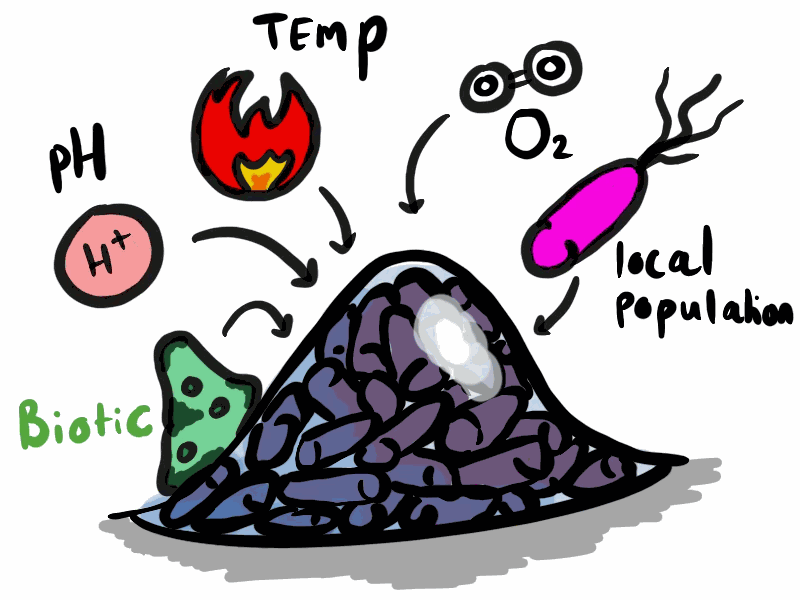
Vibrio fischeri
Free-living bacteria must balance surviving in the ocean against colonizing a host. I model how stress selects for biofilm formation, and design the experiments that can measure it.
Read more →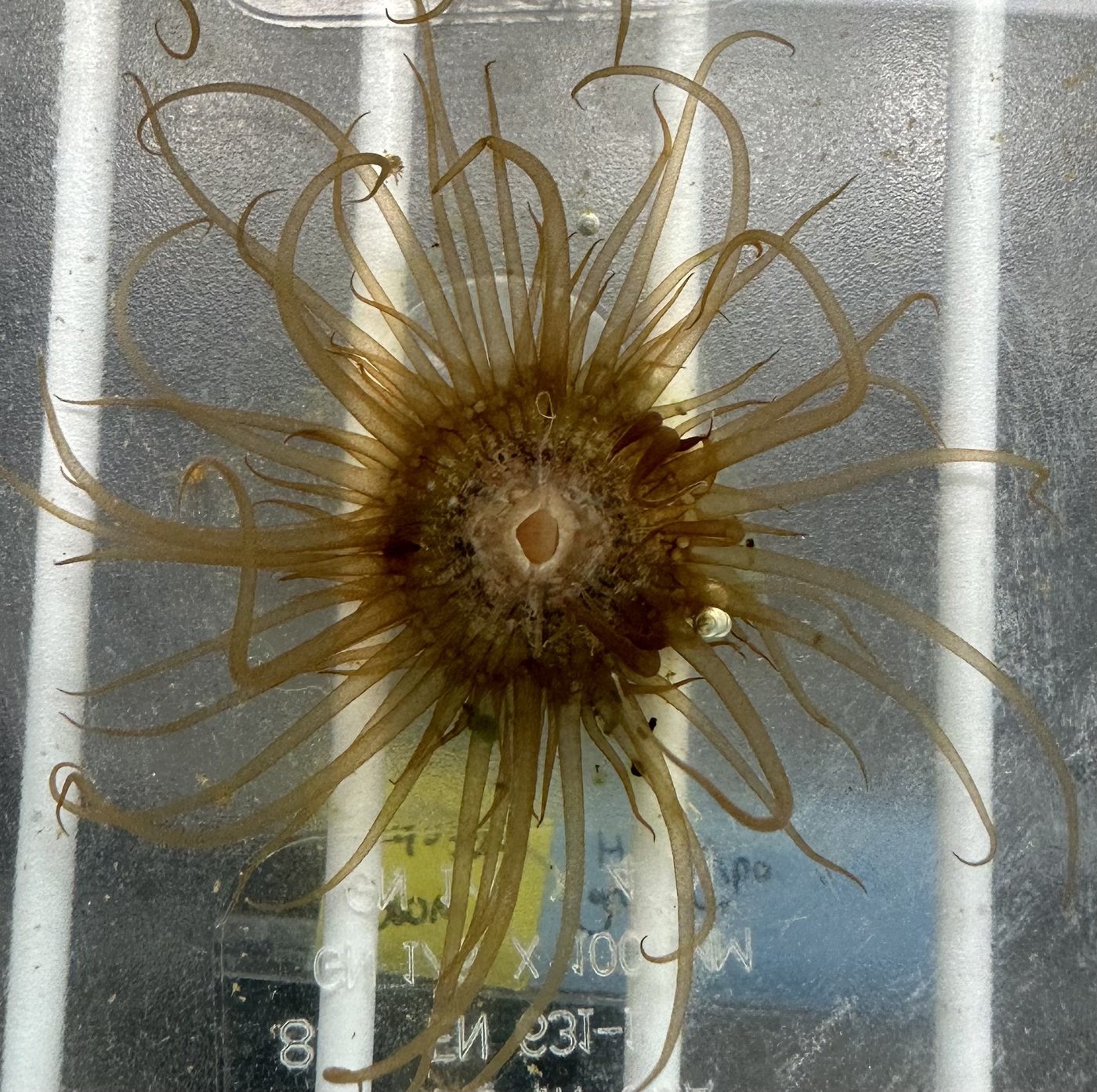
Exaiptasia diaphana
Exaiptasia hosts the same algae as reef-building corals and bleaches the same way. I build population models of how heat stress, and the anemone's microbiome, shape its growth and reproduction.
Read more →
Cassiopea
Another animal that lives with photosynthetic algae. With Kaden Muffett, I am using deep learning on daily photographs to measure when Cassiopea polyps transform into juvenile jellyfish.
Read more →
Chlamydomonas reinhardtii
My PhD work: how swimming algae push passive particles around under confinement, and how to use that to sort them. The physics behind how motile symbionts move near a host's surfaces.
Read more →Approach
I combine low-Reynolds-number fluid dynamics, population and trait-structured models, and data-driven inference, including machine-learning image analysis. The same toolkit runs through every project: build a model mechanistic enough to explain why a partnership breaks down, then ask which parameters can actually be measured, and which experiments would pin them down, so it can predict when.
All of this work is done in close collaboration with experimental labs: the Heath-Heckman lab (Michigan State), the Nishiguchi lab (UC Merced) and the Sogin lab (UC Riverside), through NSF INSITE, the Institute for Symbiotic Interactions, Training, and Education in the Face of a Changing Climate.
Image credits are given on each project page.