[Headshot]
Postdoctoral Research Scholar · Applied Mathematics, UC Merced
Stephen Williams
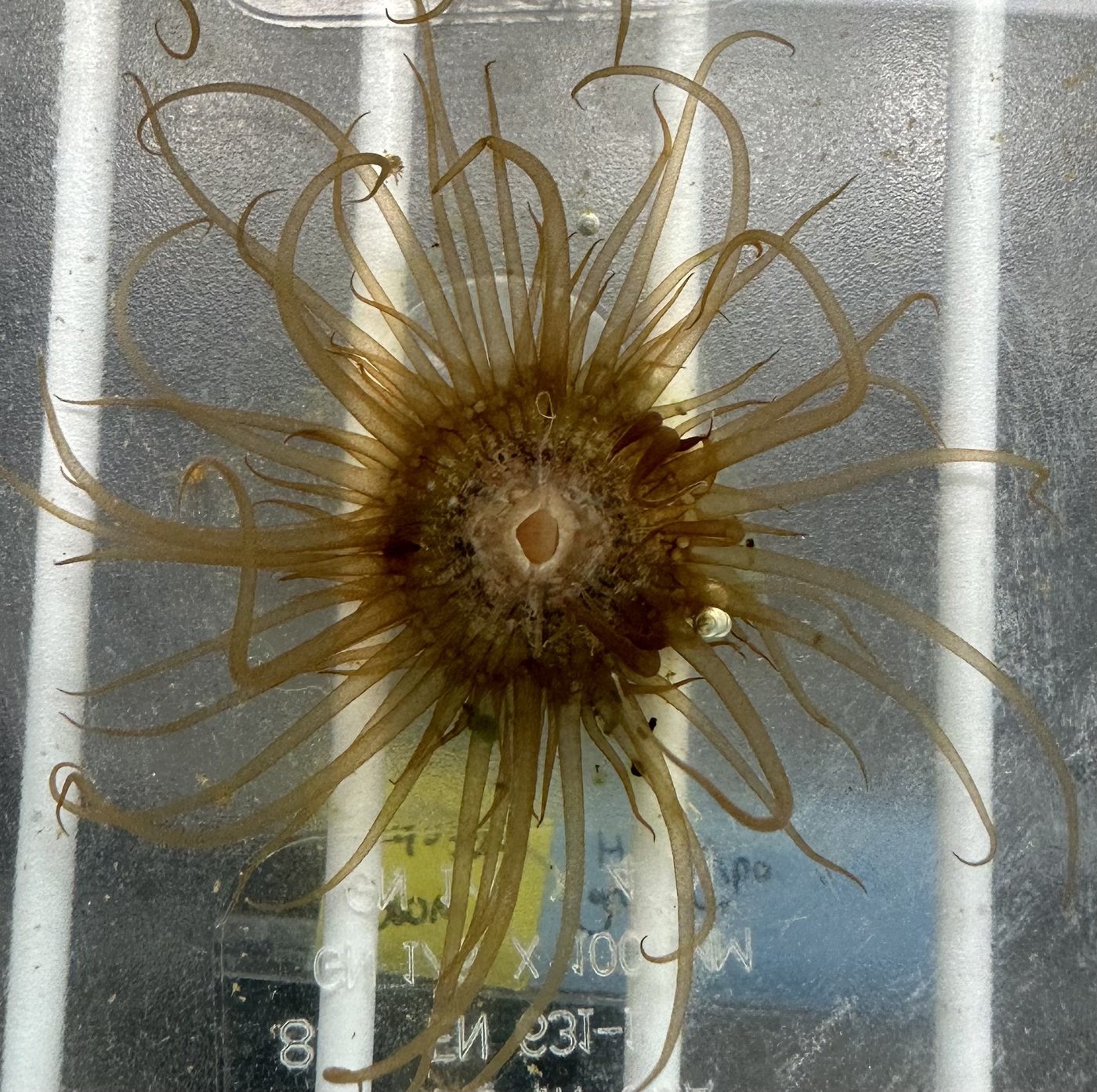
I build mathematical models to predict how partnerships between hosts and microbes form, and how they break down under stress, especially climate-driven warming. My work combines low-Reynolds-number fluid dynamics, mathematical modeling and data-driven inference, developed in close collaboration with experimental labs. My main systems are the bobtail squid and its bioluminescent symbiont Vibrio fischeri, and the sea anemone Exaiptasia diaphana, a laboratory model for coral bleaching.
I am part of NSF INSITE, the Institute for Symbiotic Interactions, Training, and Education in the Face of a Changing Climate, working with Profs. Erica Rutter and Shilpa Khatri. I did my PhD in physics at the University of Warwick with Prof. Marco Polin.
Research
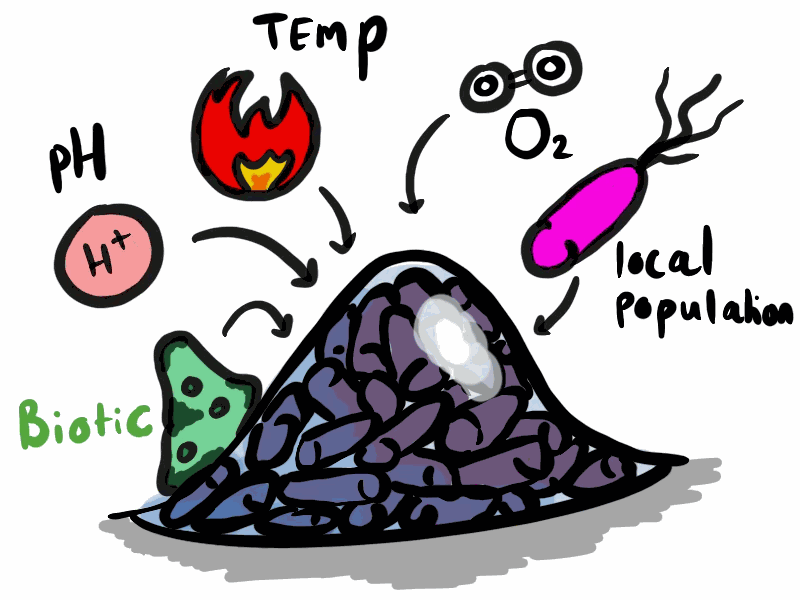
All research →Symbioses can fail at any scale: in the flows a host uses to recruit its microbes, in how microbes adapt to stress, or in host populations. I build mechanistic models at each scale, then use sensitivity and identifiability analysis to show experimental collaborators which measurements matter most.


News
All updates →- Jun 2026CassiopeaBase MATH-BIO 2026 · A contributed talk on our new Cassiopea project in Key Largo, Florida, plus a conference travel award.
- Mar 2026COOGRE Class 2026 · A hands-on workshop on mathematical modeling for UC Merced's Cooperative-based Graduate Research Experience.
- Mar 2026AMS Western Sectional 2026 · An invited talk in Boise, Idaho, on how thermal stress disrupts the flows bobtail squid use to recruit their symbionts.
- Nov 2025Thermal Stress Disrupts Symbiotic Fluid Dynamics in Bobtail Squid · A fluid-dynamics model of the squid's mantle cavity shows that heat stress can cut young squid's ability to capture the bacteria they depend on.
- Sep 2025Low-abundance taxa drive host microbiome response to temperature stress · In heat-stressed sea anemones, a small set of rare bacteria shifts before the host does, making them early-warning indicators.
Publications
Google Scholar →Identifiability, sensitivity, and genetic algorithms in bacterial biofilm selection models
Thermal stress disrupts symbiotic fluid dynamics in bobtail squid
Confinement-induced accumulation and de-mixing of microscopic active–passive mixtures
* Student I mentored.
In preparation
- Williams, S., Khatri, S., Polin, M. Controlling passive particle distributions in mixed systems through active scattering events.
- Williams, S., Muffett, K. M. Deep learning measures the timing of strobilation in Cassiopea from daily photographs.
Interactive: Stokes flow from point forces
At the scale of bacteria and the cilia that move them, viscosity dominates and flows are built from point forces called Stokeslets. Regularized Stokeslets are the method behind my squid flow models. Click to add one, drag it around, and watch tracers follow the flow.
Open full screen: sims/stokeslet-flow/
Talks & posters
| Date | Event | Type |
|---|---|---|
| Jun 2026 | CassiopeaBase MATH-BIO 2026, Key Largo, FL | Talk |
| Mar 2026 | Spring AMS Western Sectional Meeting, Boise, ID | Invited talk |
| Oct 2025 | Interdisciplinary Center for Quantitative Modeling in Biology, UC Riverside | Invited seminar |
| Jul 2025 | NITMB Workshop: Mathematical Modeling, Computational Methods, and Biological Fluid Dynamics, Chicago, IL | Talk & poster |
| Jan 2025 | Mathematics of Data, Dynamics, and Life Sciences, UC Irvine | Poster |
| Nov 2024 | 77th Annual Meeting of the APS Division of Fluid Dynamics, Salt Lake City, UT | Talk |
| Jun 2024 | SIAM Conference on the Life Sciences (LS24), Portland, OR | Talk |
Earlier talks and posters are listed in my CV. Slides and posters will be linked here.
Positions & education
- 2023 – presentPostdoctoral Research ScholarApplied Mathematics, UC Merced · NSF INSITE
- 2022 – 2023Postdoctoral Research FellowSoft Matter Physics, University of Warwick
- 2022Research TechnicianSoft Matter Physics, University of Warwick
- 2018 – 2022PhD, PhysicsUniversity of Warwick · Mixed Active–Passive Systems in Confinement
- 2014 – 2018MMathPhys, Mathematics and PhysicsUniversity of Warwick